Jackson College: How Community Partnerships Are Transforming Workforce Education and Building Futures
February
2026
Member Spotlight
Community colleges were founded on the belief that education must respond to the needs of the communities they serve. Our institutions must be nimble, innovative, and directly connected to workforce and economic opportunities. Jackson College, serving Jackson, Hillsdale, and Lenawee counties, exemplifies this mission. By forging strong partnerships with industry, K-12 districts, state agencies, and regional leaders, the college has launched two transformational projects: the Medical Simulation Center and the Applied Technology Center. These strategic investments extend beyond campus. Jackson College added $301.8 million in income to the local economy in fiscal year 2023-2024, equal to 2.2 percent of the region’s Gross Regional Product (Jackson College, 2025). Expressed another way, the college “supported 3,674 regional jobs, using the jobs-to-sales ratios specific to each industry in the region” (p. 4).
Meeting Michigan’s Workforce Moment
Michigan’s workforce is undergoing rapid transformation. Critical shortages persist in health care, energy and utilities, construction trades, and technical service fields. Employers across the tri-county region report difficulty hiring nurses, respiratory therapists, emergency medical personnel, electrical line workers, and HVAC-R technicians. The State of Michigan has turned to community colleges—particularly those with strong employer partnerships—to meet these challenges. Jackson College has responded decisively, leveraging statewide workforce strategies and aligning program development with real-time labor market insights. These efforts matter not only academically but also economically. Jackson College alumni already add $262.4 million in annual income to the regional workforce through their increased productivity—by far the most significant component of the college’s economic impact (Jackson College, 2025). This powerful alumni contribution demonstrates the long-term value of Jackson College’s academic and workforce programs.
A Shared Vision for Talent and Innovation
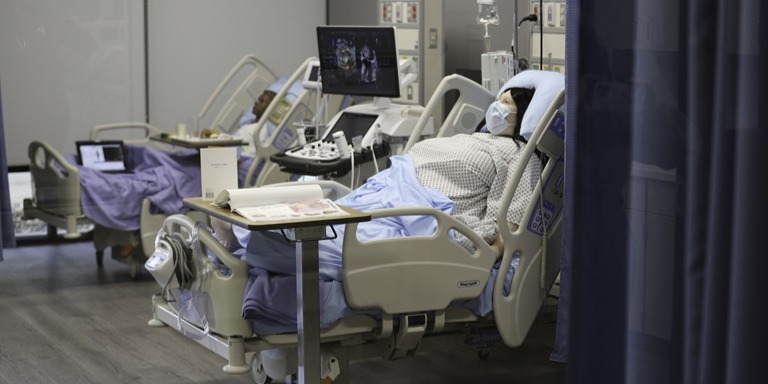
The Medical Simulation Center significantly elevates the quality and depth of training for nursing, respiratory care, medical assisting, sonography, and EMT/paramedic students. High-fidelity manikins, clinical simulation suites, trauma bays, and interprofessional collaboration labs allow students to experience realistic scenarios long before they enter clinical rotations. Students engage in hands-on simulations that replicate emergency responses, chronic care environments, obstetric and pediatric scenarios, and high-acuity critical care, all while practicing digital charting and interdisciplinary teamwork. These facilities were shaped through extensive consultation with employers, ensuring alignment with clinical competencies and workplace readiness. Health care leaders throughout the region reaffirm that simulation-trained graduates demonstrate stronger critical thinking, improved clinical judgment, and reduced onboarding time.
The Applied Technology Center focuses on preparing students for two urgently needed career fields: electrical line work and HVAC-R technology. These jobs represent some of Michigan’s highest-demand and highest-wage technical pathways and are essential to the reliability of the state’s energy, construction, and public infrastructure systems. The facility features state-of-the-art indoor training environments that simulate real-world working conditions in a safe, climate-controlled space. Electrical line worker trainees practice climbing, rigging, pole-top rescue, system troubleshooting, and safety procedures year-round. HVAC-R students train on commercial and residential heating, air conditioning, and refrigeration systems identical to those used by industry employers. These spaces ensure consistent training regardless of weather, greatly enhancing safety and instructional quality. Both programs emphasize industry-recognized certifications, workplace safety, diagnostics, and field-ready skills, directly preparing graduates for immediate employment.
Partnerships: The Engine for Transformation
Industry Collaboration: From concept to implementation, industry partners have served as co-architects of the Medical Simulation Center and the Applied Technology Center. Employers help identify needed competencies, evaluate equipment, structure curriculum, and develop assessments aligned with real-world expectations. These employers also benefit from a well-prepared talent pipeline. Access to Jackson College interns, apprentices, and graduates reduces hiring costs, supports business continuity, and ensures a reliable supply of skilled workers, particularly important in fields facing generational retirements.
State of Michigan Support: Michigan’s strategic investments in capital infrastructure, career and technical education, and regional talent initiatives were central to making these facilities possible. The investments reflect the state’s recognition that community colleges deliver high returns for students, taxpayers, and the broader economy. According to the economic impact study (Jackson College, 2025), every public dollar invested in Jackson College returns $2.40 to taxpayers and $9.20 to society. These values underscore why state support for Jackson College’s training centers represents not just educational progress but also an economic strategy.
Local Government and Community Engagement: Jackson College’s partnerships with municipalities, K-12 districts, workforce development agencies, and regional economic organizations ensure seamless alignment between academic offerings and community needs. These partnerships focus on talent retention, regional competitiveness, and economic advancement across the entire tri-county service region. Local collaboration has also strengthened dual enrollment pathways, early talent recruitment, and employer advisory committees, ensuring that academic programs remain responsive and future focused.
Academic Innovation Driven by Engagement
Strengthening Existing Programs: Health care and skilled trades programs have been redesigned to integrate simulation-based competencies, expanded lab access, and updated certifications. Feedback from employers directly informs curriculum revisions, ensuring that instruction remains aligned with industry standards.
Launching New Programs: Community and employer engagement has led to the development of in-demand program pathways, including certified welding pathways (AWS-aligned); expanded electrical, energy-sector, HVAC-R, and line worker training; and new allied health certificates. These programs are intentionally designed with stackable credentials, creating accessible entry points for adult learners, returning workers, and high school students.
Impact on Students, Employers, and the Region: Students enrolled at Jackson College earn exceptional long-term value. The average Jackson College associate degree graduate from FY 2023-2024 will see annual earnings that are $9,000 higher than a person with a high school diploma or equivalent working in Michigan (Jackson College, 2025). Over a working lifetime, the benefits of an associate degree over a high school diploma amount to an undiscounted $360,000 in higher earnings per graduate. The present value of the cumulative higher future earnings that Jackson College’s FY 2023-2024 students will receive over their working careers is $147.1 million. Employers benefit from a steady supply of well-prepared, credentialed graduates trained in environments that replicate real-world field conditions. The regional economy benefits through a stronger talent pipeline, higher regional earnings, increased tax revenue, greater business attraction and retention, and reduced reliance on importing skilled labor.
A Commitment to the Future: Jackson College views partnership not as a single initiative, but as an institutional philosophy. The college remains committed to expanding programs, investing in technology, and strengthening employer relationships to meet emerging regional needs. Future plans include additional health science programs, expanded energy sector training, and deepened collaboration with regional workforce agencies.
Together We Inspire and Transform Lives: Jackson College’s mission—“Together we inspire and transform lives”—is reflected across every space, partnership, and program described in this article. The Medical Simulation Center and Applied Technology Center represent the power of collaboration, the value of community engagement, and the economic impact of a college that continually reinvests in its region. In an era of rapid change, Jackson College stands as a model of what community colleges can achieve—proving that they are not merely responders to workforce needs, but the architects of a stronger and more prosperous future for all.
Reference
Jackson College. (2025). The economic value of Jackson College. https://www.jccmi.edu/wp-content/uploads/Economic-Impact-Executive-Summary-23-24.pdf
Lead image: Jackson College’s new Medical Simulation Center offers health care education students hands-on, lifelike simulation experiences before they work with actual patients
Benjamin Valdez is Provost and Chief Academic Officer at Jackson College in Jackson, Michigan.
Opinions expressed in Member Spotlight are those of the author(s) and do not necessarily reflect those of the League for Innovation in the Community College.