Kirkwood Community College: How Flexible Delivery and Authentic Assessment Are Reshaping Industrial Maintenance Education
January
2026
Member Spotlight
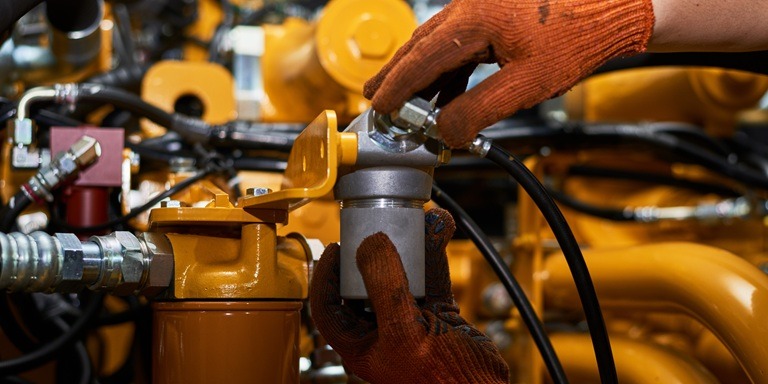
The rapid pace of industry means education programs must produce skilled, job-ready graduates quickly and efficiently. This trend has prompted many community colleges to reconsider how they design and deliver technical education. At Kirkwood Community College, we use a mastery-based approach. Students advance by proving specific skills rather than sitting through a fixed number of class hours.
To make this possible, Kirkwood has combined asynchronous content and an open lab delivery model. These tools give students flexibility while continuing to hold high expectations for quality and relevance. The Industrial Maintenance Technology (IMT) program shows how flexible learning, skill validation, and authentic assessment can better meet the needs of today's students and employers.
To meet diverse student needs while maintaining instructional quality, our IMT program focuses on three core strategies:
- Demonstrated skill mastery
- Flexible delivery
- Authentic assessment
The next sections show how each element shapes our instructional approach by combining these three strategies. Kirkwood’s IMT program provides the flexibility students need while ensuring that graduates have mastered all the skills they need to thrive in the workforce.
Demonstrated Skill Mastery: Curriculum Alignment and Instructional Design
Old models that measure learning by seat time and rigid schedules rarely meet the needs of students balancing work, family, and school. In Kirkwood’s IMT program, the top priority is ensuring that students can perform key skills in mechanical, electrical, and fluid power systems.
We work directly with employers and gather regular feedback to develop a curriculum built around workplace realities. Each unit maps to specific performance expectations. Students move through core content at their own pace using recorded lectures, digital activities, and checkpoints before hands-on lab work. This lets learners build their understanding before applying it in practical settings.
The modular curriculum means students can focus on one skill set at a time. These modules are stackable toward microcredentials and digital badges, which increase transparency and value for both students and companies.
Flexible Delivery: Open Lab Model and Student Support
Kirkwood uses an open lab delivery model to support different learning styles and life circumstances. Students may sign up for individual lab sessions or follow a set schedule, but always progress at their own pace. The lab replicates real-world maintenance settings, and faculty act as coaches who guide and verify student skills.
Some students finish a module in two weeks, while others take longer and require more support. This approach is especially helpful for working adults and parents. About this model, one student shared: “Being able to come into the lab in the afternoon, after sleeping during the day, made it possible for me to keep my job while finishing the program.”
To support student progress, the IMT program collaborates with the college’s Learning Commons to provide academic coaching and tutoring. The Learning Commons team works directly with students and partners with faculty to address common challenges, such as time management, study habits, and balancing coursework with personal responsibilities. The model accommodates both students who work ahead and those who fall behind. Faculty provide weekly formative feedback, while Learning Commons staff offer holistic coaching and support. Together, they monitor student performance and coordinate interventions to keep learners on track.
Student Feedback
- Over 60 percent said they liked being able to work ahead and finish early.
- More than 20 percent finished modules earlier than scheduled during the last academic year.
- Many appreciated the chance to revisit lectures for difficult topics.
Challenges Reported
- Forty percent of students initially preferred face-to-face lectures, but reconsidered after learning about time demands.
- Some students found self-pacing tough and needed more check-ins.
Kirkwood is addressing these issues by making videos more concise, adding interactive checkpoints and planning tools, and offering more structured time management support and guidance
Authentic Assessment: Industry-Aligned Skill Validation
Assessments in the IMT program are built to match workplace tasks and expectations. Each skill competency ends with at least one hands-on demonstration. Faculty use clear, standard rubrics for evaluation.
Examples:
- In the electrical troubleshooting component, students diagnose and repair faults in a simulated control panel. They use schematics and tools to identify the issue, fix it, and explain their process out loud. This checks their technical and problem-solving skills.
- In bearing installation, students choose the proper bearing type, prepare equipment, and complete the installation safely. They must also explain steps and safety procedures as part of the test.
Students see all rubrics ahead of time, practice in the lab, and request evaluations when ready. This model encourages autonomy while maintaining high expectations for safety, quality, and professionalism. One employer put it this way: “What [we’re] asking students to do here is exactly what we need them to do on the floor. Being able to talk through their thinking is just as important as turning the wrench.” These types of assessments mirror real job situations while helping students strengthen both their technical and reasoning abilities.
Challenges and Ongoing Development
Building asynchronous content, aligning real-world assessments, and designing flexible lab experiences require coordination among faculty. Supporting students at different speeds also demands creative scheduling and clear communication.
IMT faculty meet weekly to share strategies, adjust courses, and discuss workflow challenges. These conversations improve instructional consistency and keep everyone focused on student success. We also use our learning management system to track progress and spot support needs early.
Building on the Model
The success of the IMT model sets the stage to expand into other technical fields, such as welding, CNC machining, and mechanical engineering technology. We are developing remote equipment simulations and virtual labs for students who cannot always be on campus. In the future, digital badges, real-time progress dashboards, and advanced scheduling tools will further improve coordination and quality.
For other programs considering this approach, we suggest:
- Starting with a single course or module;
- Building shared faculty resources and lesson plans;
- Getting industry feedback early and consistently; and
- Staying focused on student needs with clear goals and strong support.
Kirkwood’s IMT program demonstrates that real-world skills, flexible learning, and authentic assessment lead to high-quality education that meets industry standards. When students can move at their own pace with tailored support, we prepare them to be both highly skilled and work ready.
This model has been particularly effective for nontraditional students, such as working adults and parents, who benefit from greater flexibility and targeted support. Ongoing input from faculty, Learning Commons coaches, and students has helped refine the system to better address the challenges these learners face. Employers have also provided valuable feedback, especially regarding the pressures students experience when balancing job and school responsibilities. These insights have informed both instructional adjustments and support strategies.
By investing in faculty development, building strong industry partnerships, and designing with intention, we are committed to scaling this model across multiple technical programs and sharing lessons learned to help other institutions adopt similar approaches.
Joe Greathouse is Dean, Industrial Technologies; Chad Daugherty is Professor, Industrial Maintenance; and David Jennerjohn is Associate Professor, Industrial Maintenance, at Kirkwood Community College in Cedar Rapids, Iowa.
Opinions expressed in Member Spotlight are those of the author(s) and do not necessarily reflect those of the League for Innovation in the Community College.