It Takes a Campus: Elevating Employee Connectedness as a College Priority
March
2026
Volume:
39Number:
3Leadership Abstracts
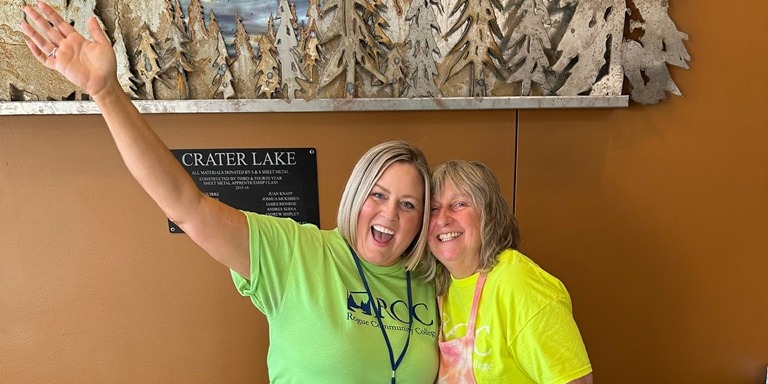
Community college employees are all in for students, yet many are stretched thin. They believe in the mission, show up for students and each other, and keep the wheels turning through constant change. At the same time, the pace and weight of the work can leave people feeling isolated from one another and distant from the decisions that shape their daily reality. When that happens, connectedness becomes more than a morale issue; it becomes a strategic leadership issue.
Approximately one in four higher education employees report being likely or very likely to seek new job opportunities within the next year (Schneider & Bichsel, 2025). While this represents an improvement from roughly one-third in 2023, it still indicates a significant retention risk (Bichsel et al., 2023). Feeling valued and experiencing a sense of belonging are stronger drivers of retention than pay alone (College and University Professional Association for Human Resources, 2023; Yakoboski & Fuesting, 2024). More than half of college faculty and staff report considering leaving their positions due to burnout, excessive workload, and stress (Rock, 2024).
When employees feel disconnected from their leaders, teams, or institutional direction, the effects are evident in student experience, service capacity, and institutional agility. Put simply, culture is strategy.
This issue of Leadership Abstracts describes how Rogue Community College (RCC), a mid-sized multi-campus community college in Southern Oregon, leveraged employee engagement survey insights to elevate employee connectedness as one of five college priorities. The article offers a transferable approach for other colleges, including a flexible change framework and a practical anchoring tool that supports sustained culture change.
The Need: When Internal Surveys Don’t Build Trust or Change
Prior to 2023, RCC administered an internally developed engagement survey modeled after Gallup-style items, with supplemental local questions. The intent was sound: Gather regular feedback and inform decision-making. Over time, however, three barriers limited its usefulness.
Confidentiality concerns persisted, especially in smaller departments where open-ended comments could feel identifiable. RCC lacked external benchmarks, making it hard to determine whether lower scores reflected campus-specific issues or broader sector pressures. And, finally, the survey was often viewed as HR-led rather than a shared institutional responsibility, and follow-through beyond HR’s scope was not consistently visible to employees.
The outcome was limited trust, low participation, and little momentum for change. As RCC navigated the pandemic disruption and a period of steep enrollment decline, the college needed a more credible campuswide approach to understanding the employee experience and responding in ways that employees could see and feel.
Adopting the Great Colleges to Work For Survey
In 2023, RCC transitioned to the Great Colleges to Work For® (Great Colleges) survey to strengthen trust in employee voice through four commitments: credibility, confidentiality, comparison to peers, and transparency in reporting. The college invested in a comprehensive administration that included staff, full-time and adjunct faculty, and administrators, and paired the results with detailed reporting and consultation support. This was both a methodological improvement and a leadership move to position employee experience as a strategic concern.
What the Data Revealed
RCC’s first Great Colleges survey launched year one of a two-year baseline, with a 39 percent response rate overall. Results affirmed strong pride in mission and meaning in work, while highlighting stronger connectedness within workgroups than across the institution.
Employees reported high trust in direct supervisors and strong team relationships, reflecting a healthy relational core at the department level. Connectedness weakened beyond workgroups. Ratings tied to executive direction, communication, and perceived credibility were notably lower than department-level trust measures. Open-ended comments echoed this pattern, calling for clearer communication, stronger follow-through, and a reduced perceived divide between leadership and employees. Cross-departmental collaboration showed similar strain.
Overall, mission engagement was a clear strength, while institutionwide connectedness emerged as the opportunity, especially across divisions and in perceptions of executive leadership. This aligns with broader research showing a familiar tension in higher education: deep commitment to students alongside widespread overextension and disconnection (Eisenberg et al., 2024; Rock, 2024). RCC leaders took this as a clear call to build on the relational core and strengthen collegewide trust, alignment, and cohesion.
From Data to College Priority and Culture Change
Beginning in 2022, RCC adopted an executive- and board-informed college priorities approach. While reviewed annually, the priorities are designed to sustain long-term commitments and lay the groundwork for the next strategic plan. The Great Colleges results and subsequent campus dialogue underscored that employee experience is essential to RCC’s ability to deliver on its most important, student-centered work. Enrollment stabilization, student success, guided pathways, systems thinking, and community partnerships all depend on a culture of trust, collaboration, and shared direction.
With baseline data and collective sense-marking showing strong department-level trust but weaker institutionwide connection, leaders posed a focused question: What leadership and system shifts are needed to extend team-level strength into true collegewide connectedness? That question led to employee connectedness becoming a college priority for 2024-2025, with an explicit commitment to continue it in 2025-2026. The data did not point to a deficit in mission engagement; it pointed to a need for stronger connection across the institution. Connectedness captured the full scope of that work, encompassing relational health, trust across divisions, access to information and decision-making, and a shared sense of belonging. Naming it as a priority positioned the work as collegewide and jointly owned across leadership and governance.
A Flexible Change Model
To avoid survey fatigue and drift, RCC used a simple, repeatable framework: Data → Dialogue → Action → Culture.
Data: Great Colleges provided credible baseline metrics and comparisons. RCC shared results broadly with governance groups, leadership teams, and all employees to create a shared starting point.
Dialogue: Listening sessions and forums held across various locations and modalities emphasized listening; prioritized psychological safety; and invited employees to interpret the results, share stories behind the numbers, and contribute ideas to build upon strengths and address opportunities.
Action: Themes from dialogue informed the institutional action plan, with departments setting aligned connectedness goals focused on communication, recognition, collaboration, and belonging.
Culture: Actions were designed to become durable norms rather than one-time initiatives, integrated into how RCC plans, leads, and works together.
This model offered a clear pathway for change. To keep connectedness from living only in plans or survey cycles, RCC needed a practical way to carry it into daily systems and habits. The Five Ps provided that structure.
Anchoring Connectedness Into Culture: The Five Ps
Employee connectedness work at RCC has been guided by an internally developed organizing lens called the Five Ps. This modular approach helps carry a culture priority across multiple strategies over time.
Planning: RCC elevated employee connectedness as a college priority in 2024-2025 and continued it in 2025-2026. Leaders aligned institution-level action planning and KPIs across divisions, departments, and roles, creating a clear line of sight between connectedness goals and everyday work.
Programs: RCC strengthened connection through structured programs, including the Welcome to Rogue onboarding series, a redesigned new employee orientation centered on belonging and cross-campus relationships, the supervisor series, and expanded recognition.
Partnerships: The priority is shared across academic and administrative leadership through cross-functional structures such as the Professional Development Council, co-leadership approaches, and shared-governance improvements that strengthen collegewide voice. For example, employee groups were added to the policies and procedures committee, expanding representation in institutional policy work.
People: Connectedness is carried through leadership behavior at every level. Executive leaders modeled transparent communication and invested in year-long team leadership development. Supervisors were supported in strengthening team trust and belonging, and grassroots champions were invited to lead, share solutions, and tell the story of connectedness in practice.
Practices: RCC emphasized repeatable habits that sustain connection, such as inclusive communication, follow-through, cross-campus collaboration, visible feedback loops, and strengthened communication channels (e.g., the Rogue Report newsletter). Over time, these practices help connectedness become part of how work is done, independent of any one leader or program.
Together, the Five Ps offer a practical structure for moving from survey insight to lived culture. While still maturing, the framework provides a replicable blueprint that other colleges can adapt to their own context.
Results and Emerging Impact
While this work is still unfolding, the first signs point to real momentum. Great Colleges was administered in 2023-2024 and again in 2024-2025 as a two-year baseline. The response rate rose from 39 percent to 40.2 percent, suggesting continued confidence in confidentiality and employee voice. Early movement appeared in connectedness-related areas, including gains in inclusion, belonging, and community and improvement in communication. Employees also reference results more routinely in meetings and forums, indicating that the survey has become a shared reference point. With the baseline in place, RCC has transitioned to a three-year cycle that balances meaningful trend data with the capacity for follow-through.
Beyond the survey, connectedness has become a common frame in planning and leadership discussions, helping reduce siloed culture work. By embedding connectedness into institutional planning, KPIs, and divisional work plans, RCC has reinforced employee experience as a lever for advancing other college priorities. While not all measures have shifted dramatically yet, leaders are seeing more cross-functional collaboration, greater openness in forums, and increased appetite for shared governance improvements. Conversations about workload, recognition, and inclusion are increasingly framed as strategic concerns rather than individual complaints.
Lessons Learned and Recommendations for Community College Leaders
RCC’s experience offers several lessons for leaders seeking to move from engagement data to culture change:
- Use credible, benchmarked data to earn trust. Third-party surveys can strengthen confidentiality and provide context that enhances interpretation.
- Pair data with structured dialogue. Employees need to see that their stories matter as much as the quantitative scores. Listening converts results into shared meaning and practical insight.
- Describe the work in everyday language. Connectedness broadens ownership beyond survey mechanics to relationships and belonging.
- Anchor culture change in systems, not individuals. The Five Ps weave connectedness into how the college plans, leads, and works together, beyond any one champion.
- Link employee experience to mission execution. Connectedness is not separate from student success; it enables it.
Next Steps: Sustaining and Scaling Connectedness
With a baseline established, RCC is now focused on sustaining and scaling connectedness. Enrollment recovery and institutional renewal are unfolding alongside this culture work, and when staffing cannot scale as quickly as student demand, connectedness gives RCC an edge for sustaining coordination and service. Next, RCC is strengthening shared governance to enhance voice, transparency, and decision-making pathways across roles and divisions, and tracking impact through future Great Colleges cycles and local indicators such as retention, participation, and qualitative feedback. This will guide institutional action plan follow-through and expand effective programs and practices across campuses and workgroups.
Ultimately, RCC’s experience demonstrates that employee connectedness belongs among a college’s highest-level priorities. When leaders ground the work in credible data, authentic dialogue, visible action, and aligned systems, connectedness shifts from a survey outcome to a cultural capability. For community colleges committed to student success, innovation, and growth, that capability is indispensable. It truly does take a campus.
References
Bichsel, J., Fuesting, M., Tubbs, D., & Schneider, J. (2023). The CUPA-HR 2023 higher education employee retention survey findings. College and University Professional Association for Human Resources. https://www.cupahr.org/resource/higher-ed-employee-retention-survey-findings-september-2023
College and University Professional Association for Human Resources. (2023, September 12). The top predictor of higher education employee retention may surprise you. https://www.cupahr.org/resource/the-top-predictor-of-higher-ed-employee-retention-may-surprise-you-2023-09-12
Eisenberg, D., Ketchen Lipson, S., Heinze, J., & Zhou, S. (2024). The healthy minds study: 2023-2024 faculty and staff report. Healthy Minds Network. https://healthymindsnetwork.org/wp-content/uploads/2024/09/HMS_national_report_090924.pdf
Rock, A. (2024, February 16). College faculty burnout: The statistics and solutions. Campus Safety. https://www.campussafetymagazine.com/news/college-faculty-burnout-the-statistics-and-solutions/132000
Schneider, J., & Bichsel, J. (2025, September 17). The CUPA-HR 2025 higher education employee retention survey. College and University Professional Association for Human Resources. https://www.cupahr.org/resource/higher-ed-employee-retention-survey-findings-september-2025
Yakoboski, P. J., & Fuesting, M. (2024). What do higher education employees value most in a job? TIAA Institute and College and University Professional Association for Human Resources. tiaa-institute_cupa-hr_what-do-he-employees-value-most-evp_ti_yakoboski_ september-2024.pdf
Jamee Harrington is Vice President of People, Culture, and Safety, Chief Human Resources Officer, and Chief of Staff at Rogue Community College in Grants Pass, Oregon.
Opinions expressed in Leadership Abstracts are those of the author(s) and do not necessarily reflect those of the League for Innovation in the Community College.