
The Overlooked Outcome: How Simulation Training Develops Leaders, Not Just Technical Skills
December
2025
Volume:
38Number:
12Leadership Abstracts
Although simulation training has long been recognized as an effective strategy for the development of fundamental technical skills, trainers, educators, and administrators often overlook a critical secondary outcome of training simulation that is hidden in plain sight—the profound leadership development that occurs when students navigate complex, high-pressure scenarios with incomplete information and time constraints.
As students practice consequential decision-making, coordinate team responses, and adapt to unpredictable circumstances in realistic environments, they unconsciously develop the very leadership traits that will define their effectiveness in the field, including decisiveness, emotional regulation, situational awareness, and the ability to inspire confidence in others during difficult situations. This leadership development happens organically through experiential learning, yet it represents perhaps the most valuable outcome of scenario-based training and other simulations—transforming students from technically competent graduates into natural leaders who can perform under pressure and guide others through uncertainty.
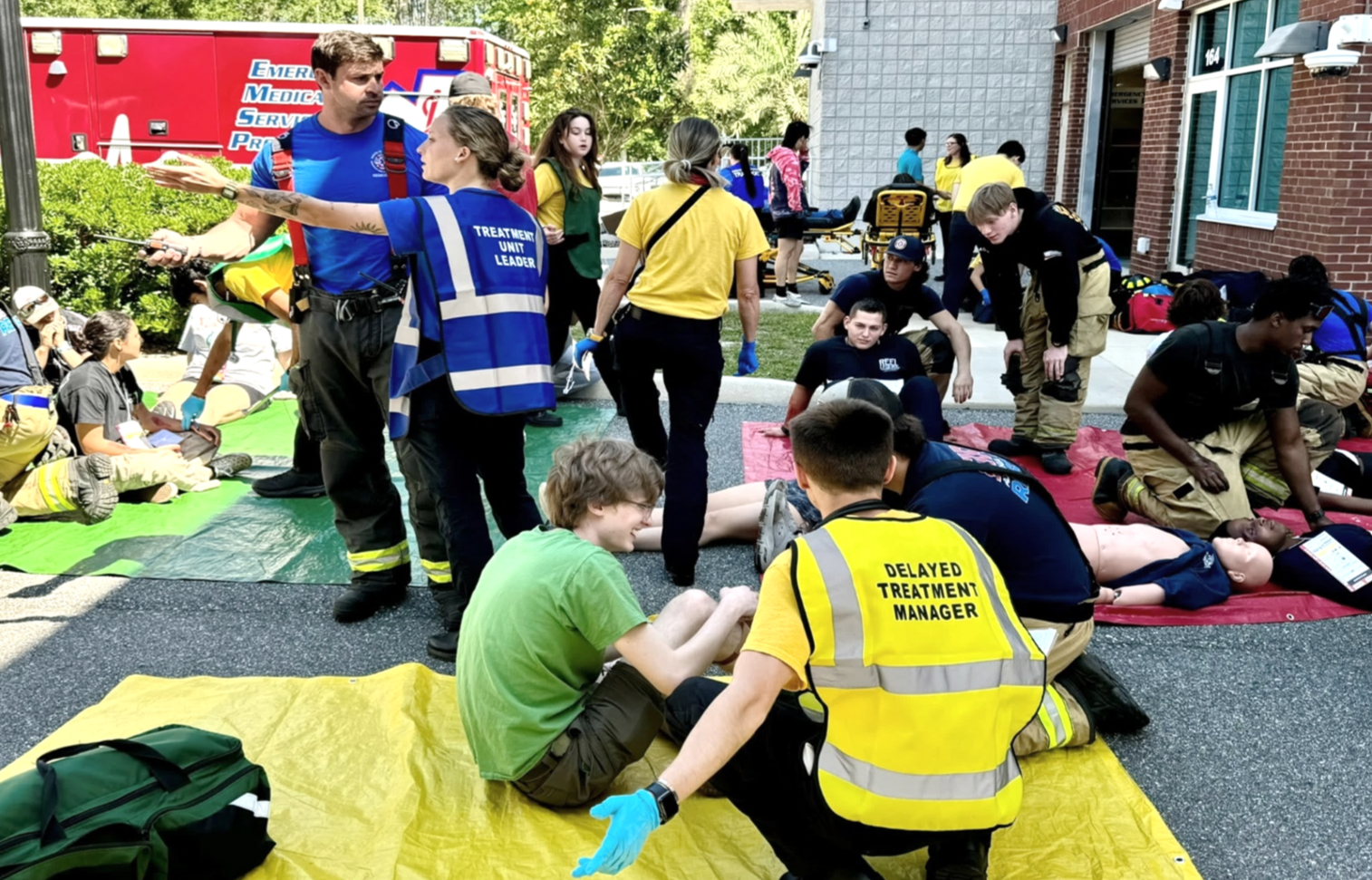
Emergency medical technician students perform triage activities alongside active
firefighters during a simulated mass casualty incident (photo by author).
The Main Street Complex: A Model for Leadership Development
Santa Fe College has a state-of-the-art public safety training facility that includes several storefronts, a fully operational restaurant and bar, a furnished townhouse, an interactive multimedia law enforcement training simulation laboratory, basic and advanced emergency medical services (EMS) labs, and a city block streetscape where students engage in realistic scenarios. In this mock cityscape, which is housed within the college’s Institute of Public Safety (IPS), police academy recruits, emergency medical technician (EMT) and paramedic students, and experienced law enforcement and EMS personnel respond to incidents that mirror challenges they will face on the job. What sets the Main Street Complex apart from other facilities is the elaborate scenario technologies system, which includes hundreds of cameras and microphones that are used to record and play back scenarios for teaching purposes. The system also includes dozens of speakers as well as motion sensors that can trigger special effects such as background noises and other sounds, explosions, smoke, and aromas.
Since the Main Street Complex opened, student success has improved. When students improve their performance during training simulations, they likewise perform better in the classroom. Additionally, after graduation they hit the ground running in their careers because they have already practiced the complex technical, decision-making, and leadership skills required in real-world situations.
The IPS facility represents a transformational approach to public safety training, moving beyond traditional classroom instruction to create immersive, experiential learning environments. The combination of realistic settings allows students to experience the full spectrum of public safety challenges, from routine traffic stops to complex multi-agency emergency responses. It also provides a safe environment in which students can make mistakes, learn from them, and develop the confidence necessary for effective leadership.
Measurable Success: Six Years of Excellence in Student Outcomes
The measurable impact of the Main Street Complex on student success validates the leadership development occurring through simulation training. Since the facility opened in 2018, IPS students have achieved exceptional industry certification outcomes. From 2019 to 2024, 92 percent of EMT students and 97 percent of paramedic students passed the national certification exam, while 98 percent of police academy recruits and 100 percent of corrections academy recruits passed the State of Florida certification exam. These outcomes reflect more than technical competency—they demonstrate that students who have practiced decision-making, communication, and crisis management in realistic scenarios face the exams and enter their careers with the confidence and leadership mindset of experienced professionals. The simulation environment has not only improved their technical skills but has also developed the critical thinking, stress management, and situational awareness that distinguish successful public safety professionals from those who merely meet minimum standards.
Beyond Technical Skills: The Hidden Leadership Laboratory
The leadership development occurring in simulation training extends far beyond what meets the eye. When students respond to a domestic violence call in our simulated townhouse, they are not simply learning arrest procedures or medical protocols. They are developing command presence, learning to make split-second decisions with incomplete information, coordinating with multiple agencies, and managing the emotional complexity of human crisis situations.
Each scenario presents multiple leadership challenges simultaneously. For instance, a medical emergency may require students to triage patients, direct bystanders, coordinate with arriving units, and communicate with hospital personnel, all while maintaining calm authority in a chaotic environment. These experiences develop the same leadership competencies that will define their success as supervisors, managers, and community leaders throughout their careers.
The interactive multimedia law enforcement training simulation system, manufactured by Laser Shot, adds another dimension to this leadership development. The Laser Shot system requires trainees to exercise use-of-force decision-making while considering options such as asking questions, giving commands, using deadly force or less-than-lethal tools, or de-escalating situations. The interactive nature forces students to project authority under pressure while considering the broader implications of their actions on officer safety, community relations, and public trust. These repeated high-stakes decision-making experiences develop the executive judgment, ethical reasoning, and adaptive communication skills that distinguish effective law enforcement leaders from those who simply follow protocols.
Core Decision-Making and Command Presence
Simulation scenarios develop decisive leadership by requiring students to make decisions under pressure with incomplete information. Unlike classroom discussions about leadership theory, students experience the physiological stress of real confrontations while maintaining command presence. They learn that effective leadership requires both quick decision-making and the ability to inspire confidence in others during the most challenging moments.
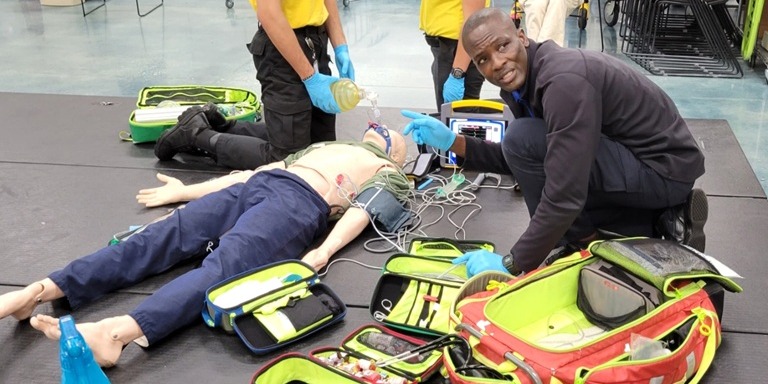
A cardiac arrest scenario in the Main Street Complex demonstrates this perfectly. EMT students must quickly assess the situation, delegate CPR duties, select appropriate equipment and supplies, coordinate with arriving paramedics, manage family members, and communicate with law enforcement personnel on-scene. Each decision point develops the decisive leadership skills that are essential for future supervisors and managers.
Adaptive Communication and Emotional Intelligence
Different scenarios demand different leadership approaches, teaching students situational leadership competencies. A mental health crisis requires empathetic communication and de-escalation skills, while an active shooter situation demands clear, authoritative commands and rapid coordination. In either scenario, students learn to read the situation quickly and adjust their leadership style accordingly—skills essential for managing diverse teams and serving diverse communities and requiring high levels of situational awareness and self-awareness. Main Street Complex and Laser Shot simulation system scenarios excel at developing these skills. Students must effectively communicate with suspects, victims, witnesses, bystanders, and fellow responders simultaneously, developing the multi-audience communication abilities essential for future police executives, fire chiefs, and EMS administrators.
Ethical Leadership and Emotional Regulation Under Pressure
Simulation scenarios present moral dilemmas where students must make principled decisions while balancing competing values, such as constitutional rights, responder safety, public protection, and community trust. This ethical decision-making under stress is fundamental to public safety leadership, where supervisors must guide officer behavior during controversial incidents and make policy decisions that affect entire communities. Repeated exposure to high-stress scenarios in a controlled environment develops stress inoculation, allowing students to maintain clear thinking and effective leadership even under extreme pressure. This resilience becomes crucial for future leaders who must make critical decisions during major incidents, budget crises, natural disasters, or public controversies.
Team Coordination and Resource Management
Multi-agency scenarios, such as an EMS mass casualty exercise or an active shooter response, teach students to think like incident commanders, coordinating groups and resources across different organizations with varying protocols and priorities. They learn to delegate effectively, manage competing demands, and maintain operational control while situations evolve, all skills needed for leadership positions in public safety agencies and other organizations.
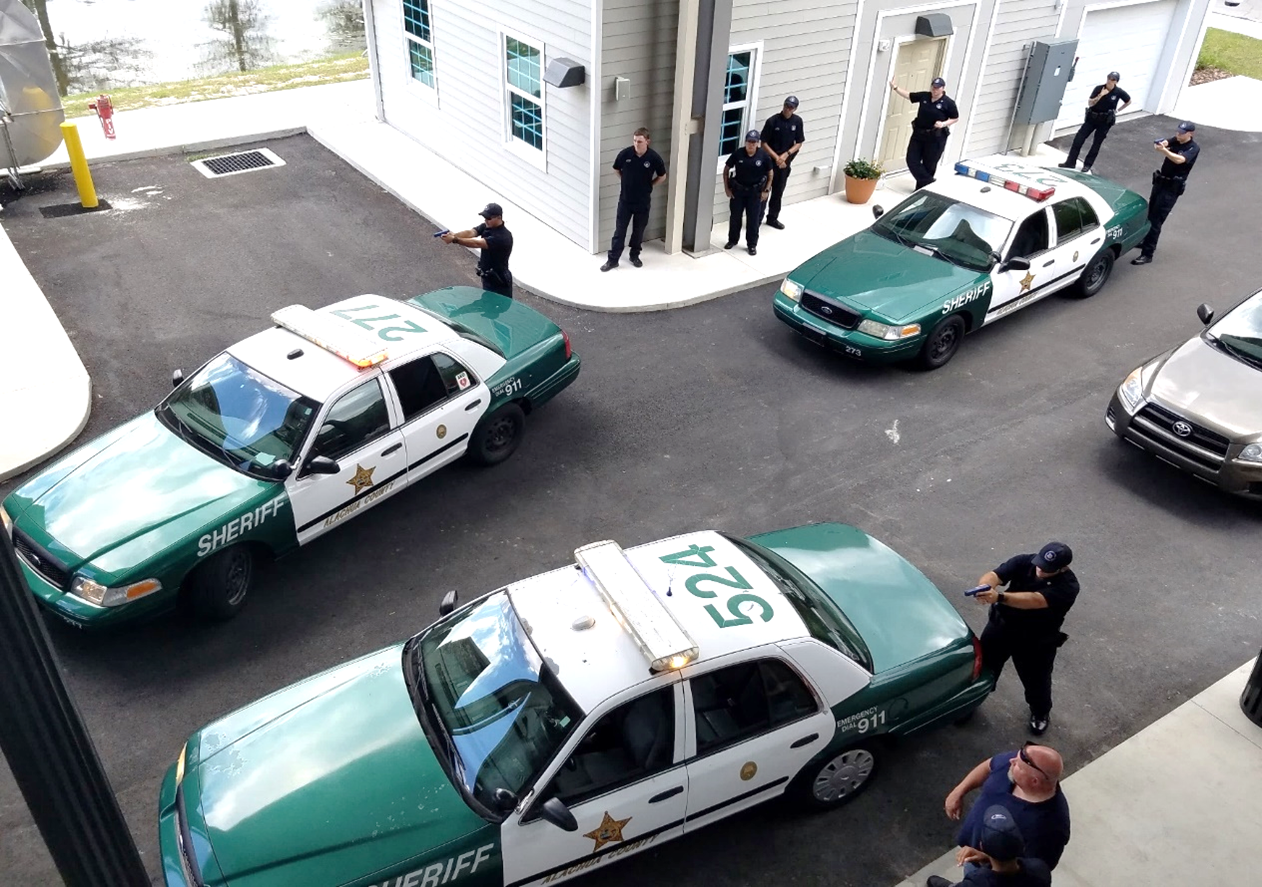
Police academy recruits engage in a high-risk traffic stop scenario (photo by author).
The Broader Landscape: Simulation Training Across Community College Programs
The leadership development occurring in the Main Street Complex reflects a broader trend across community college education and training. Simulation training has become integral to many degree and certificate programs, each developing leadership competencies alongside technical skills. For example, healthcare education programs integrate simulation extensively, often supplementing clinical hours with simulation training. These programs use high-fidelity manikins, patient role-players, and computer-based virtual simulations to develop not only clinical and communication skills but also the leadership abilities essential for chair and bedside clinicians, home healthcare providers, nurse managers, and healthcare administrators, among others.
When information technology and cybersecurity programs utilize virtual network environments, such as server configuration and cloud computing simulators, network breach simulations, and incident response scenarios, students cultivate the strategic thinking, crisis management abilities, and collaborative problem-solving skills necessary for IT directors and cybersecurity leaders who must protect organizational assets while managing response teams during security incidents. Similarly, students in construction and skilled trades programs develop project coordination knowledge, problem-solving and risk management skills, and resource management abilities when they engage in training simulations—skills that are crucial for construction supervisors, site managers, and trade contractors who must ensure worker safety while meeting project deadlines and quality standards.
Recognizing, Optimizing, and Integrating Leadership Development
The first step for community college administrators is to recognize that leadership development is already occurring in degree and certificate programs that incorporate simulation activities. Faculty need support in understanding and articulating these leadership outcomes to students, employers, and accreditation bodies. College professional development programs should help instructors recognize and enhance the leadership components of their simulation scenarios. In addition, leadership competencies should be explicitly integrated into simulation curricula and assessment rubrics. Rather than focusing solely on the demonstration of technical skills, assessments should evaluate decision-making under pressure, communication effectiveness, team coordination, ethical reasoning, and other competencies that align with positive leadership traits. This explicit recognition will help students, faculty, and administrators understand the full value of their simulation experiences.
Industry Partnership and Employer Engagement
Community colleges should also engage with potential employers to highlight the leadership competencies their simulation-trained graduates possess. Police chiefs, fire chiefs, EMS directors, and hospital administrators need to understand that graduates have developed leadership skills in realistic scenarios, making them more valuable employees from day one. This same leadership advantage extends to graduates across all college programs that incorporate simulation training, from welding to business administration, accounting, healthcare fields, manufacturing, information technology, and psychology.
Resource Allocation and Facility Development
Investing in simulation facilities and training technologies represents an investment in leadership development, not just technical training. When requesting funding or planning facilities, administrators should emphasize the leadership outcomes alongside technical competencies. The return on investment includes graduates who advance more quickly into supervisory roles and demonstrate stronger leadership capabilities throughout their careers.
The development of comprehensive simulation facilities represents transformational leadership at the institutional level. Community colleges that invest in these capabilities demonstrate visionary thinking, adaptive problem-solving, and commitment to student success. Institutional leadership support creates a ripple effect, developing graduates who become leaders in their communities and professions.
The decision to create facilities like Santa Fe College’s IPS Main Street Complex requires strategic thinking, careful resource allocation, and the courage to innovate in educational delivery. In other words, leaders must adopt the same leadership qualities our graduates develop through their simulation experiences—the ability to identify gaps, create solutions, and implement changes that benefit entire communities.
Measuring Success and Continuous Improvement
Community colleges should track not only traditional metrics, such as job placement rates and certification pass rates, but also leadership-specific outcomes. Alumni surveys should assess career advancement, supervisory responsibilities, and leadership roles achieved by simulation-trained graduates, and employer feedback should address leadership competencies demonstrated by recent graduates. Long-term tracking of graduate career progression can also demonstrate the lasting impact of simulation-based leadership development. Graduates who advance to supervisory, administrative, or executive positions could validate, in part, the leadership development occurring in community college simulation activities.
Embracing the Leadership Development Revolution
The transformation is already unfolding in community colleges across the U.S., yet many institutions remain unaware of the leadership development occurring within their own programs. By intentionally recognizing and enhancing the leadership outcomes of simulation training, college administrators can position their institutions not merely as technical training providers but as developers of the confident, adaptive leaders our communities desperately need. The question is no longer whether simulation training works—the evidence is clear—but whether we will fully embrace and optimize its power to create leaders who can navigate uncertainty, inspire teams, and make critical decisions when lives hang in the balance. The future of public safety and other fields depends not just on technically competent graduates, but also on skilled leaders who can rise to meet the challenges of their professions in a rapidly changing world.
Lead image: Paramedic and emergency medical technician students treat a cardiac arrest victim during an emergency medical response simulation (photo by author).
Thomas Ackerman is Director, Institute of Public Safety, and adjunct professor, leadership and management, at Santa Fe College.
Opinions expressed in Leadership Abstracts are those of the author(s) and do not necessarily reflect those of the League for Innovation in the Community College.